
~ “Creativity is the process of having original ideas that have value” – Sir Ken Robinson
When I was in school, I hated writing. When I left school and became a homeschooler at the beginning of Year 4, I hated it even more. If you had told me from the age of 7 up until 18, that I would now be spending each day teaching myself how to make a career through my writing, I would’ve laughed it off.
The fact is, school killed my creativity. For years, I had this warped belief of writing and what you had to do to be a ‘good writer’. I distinctly remember being told to write several pages, at the age of seven, about a subject I had no interest in. I struggled to finish two pages, let alone the four I had been asked to. I was taught that to learn poetry, I had to print off a poem each week and glue it into a book that I had decorated. Then, I would stand in front of my classmates and recite my poem, a nightmarish situation even now.
It’s only been recently, the past few months actually, I discovered that my dislike of poetry is a direct result from the lack of creative interaction I experienced during literacy instruction. I turned to Mum in the car only a few weeks ago and said this to her:
“Mum, I think my harsh judgement about stuff like poetry is because that’s what I learnt in school.”
In school, I had learned that poetry could only be done a certain way, about certain topics, or certain genres and if it wasn’t, then my writing wasn’t good enough. So try again.
This belief had attached itself like a parasite to all other forms of art that I tried to pursue after school as well. My writing wasn’t good enough, I couldn’t draw very well, my painting was subpar at best and god forbid I try to craft something without guidelines or instructions on how to do it first. My self-doubt ruled over me for years, dictating everything that I tried to learn, and how I was able to learn it.
It’s taken me eleven years to become comfortable with even just immediate family reading any personal writing that I do. I remember the first time I decided to see what would happen if I left some of my writing out. Wanting to test the waters of my parents’ reactions rather than proudly show them what I had crafted, I had left one of my notebooks that I’d spent the previous night writing a story in. Out on the kitchen bench, just off to the side, but open on one of the pages that I had poured my heart onto.
When Mum asked me about it, I was genuinely surprised to hear that she thought it was good. As if I was expecting criticism from her like I had heard from my teachers previously, about how that sentence wasn’t structured properly, or how I should try and rewrite it to be just a little better. Instead, I just nodded, said thanks and took the book back into my room. That night I wrote several pages more before going to sleep.
Because of those years, I often wonder what it would’ve been like if I had been encouraged sooner to learn with my heart, rather than taught to think with my head. Would I have started writing again sooner? Probably. Would I have ever stopped writing, too afraid that whatever I put on the page wasn’t good enough for a first draft? Probably not. It’s still something I struggle with, admittedly.
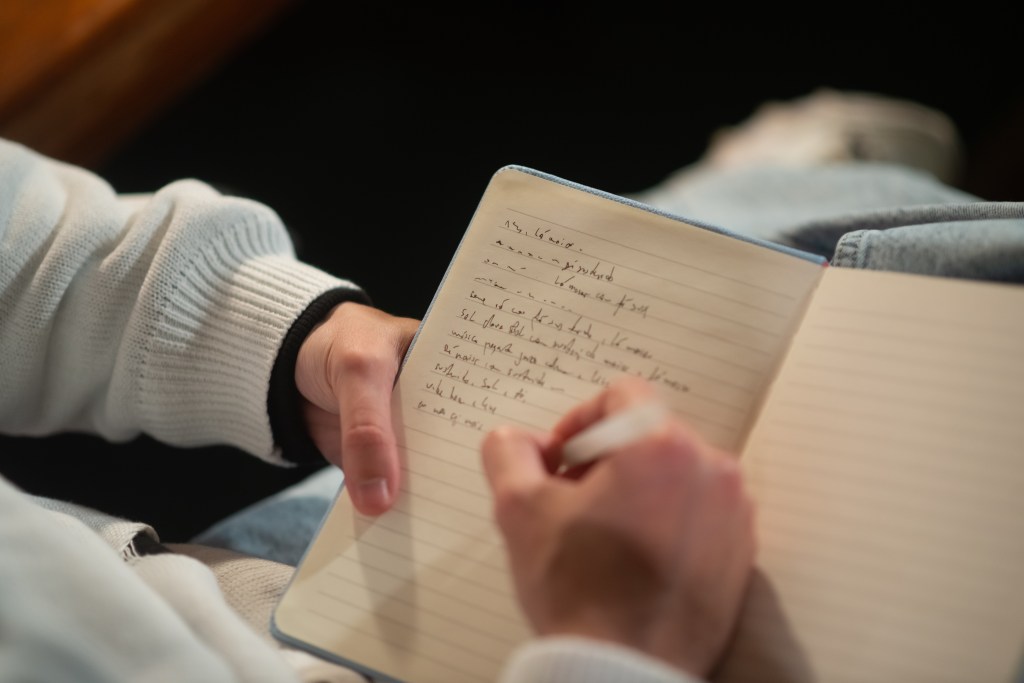
I don’t think that I could ever blame my teachers for how my relationship with creativity declined so rapidly during my short time in school. I know now more than ever, that they were teaching writing the way they had been taught to. But I also can’t get back the years that I spent huddled with my notepad and a torch in bed, writing while I should have been sleeping so that I wouldn’t get caught. Because, for so long, I believed that my passion and love for writing was something to be embarrassed about and that how I wrote was ‘wrong’. Simply because it didn’t look like the writing expected of me at school.
My creativity is now the most important thing to me. It’s something that I’m actively learning how to adapt into an income source, a lifestyle, and a general practice through each day. When I relearned how to write through my heart, everything clicked back into place, and I felt the pure unbridled joy I used to feel as a kid whenever I wrote for myself. It’s something that I wish I had nurtured and encouraged in school, rather than writing being presented as a methodical, mechanical skill instead.
If I had been encouraged to write about the things I was passionate about at the time, from the adventures I sent my stuffed animals on, to the wildlife around the world… my love for writing may not have been locked away for so long. If I had been encouraged to fail in everything that I tried, then I would’ve felt less fear, if any. Rather, I had spent so many years believing that above all else, I could not fail at this, because if I failed then I was not good enough to keep trying it.
It’s imperative that schools and the education curriculum prioritise creativity, just as much as science or maths. Creativity should be seen as a priority throughout your life, not a tool or a hobby to fall back on. Your brain craves learning, and the best way to do that is by being creative. Problem-solving, quick thinking, brainstorming, and even working with others. All those and more require you to think creatively, rather than through equations from a textbook.
Fostering creativity in schools means embracing failure as a necessary part of learning. When students are encouraged to take risks and explore their passions without fear of being ‘wrong,’ they grow not only as learners but as confident, quick-thinking individuals. Creativity teaches us to think critically, adapt, and innovate. This, in turn, equipts students with tools to navigate an ever-changing world. By prioritizing creativity, schools can empower the next generation to thrive, not just academically, but in all aspects of life.
Creativity is not a luxury—it is a critical skill, as essential as reading, writing, and maths, to help students navigate an ever-changing world.
~ “If you’re not prepared to be wrong, you’ll never come up with anything original.” – Sir Ken Robinson
 YouthVoices4Ed
Leave a comment